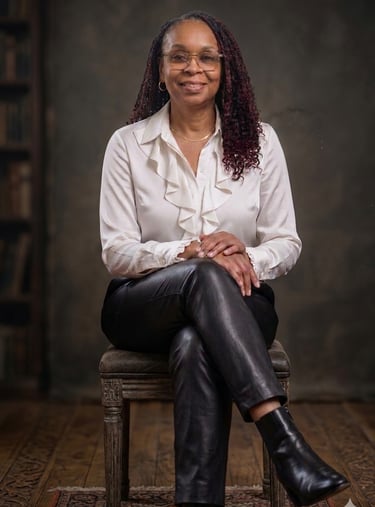
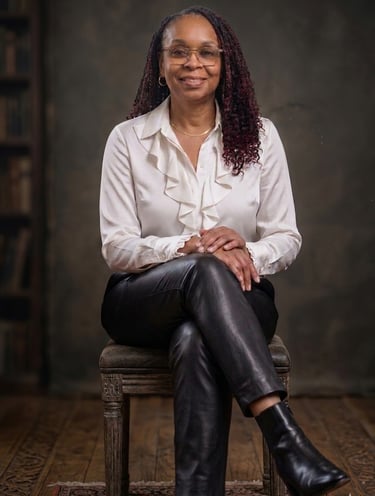
Faith, Healing, and Reinvention for Christian Women
Welcome to the Seasoned Soul Sister’s Place🤍
If you’ve found your way here, chances are you’ve lived a little.
You’ve been hurt, misunderstood, betrayed, or stretched in ways you never asked for. You love God—and you’re still healing. Still unlearning. Still figuring out what wholeness looks like now.
This is a place for truth-telling and tenderness.
A place where faith and healing meet—without judgment, without pretending, and without pressure to be “over it.”
At Seasoned Soul Sister’s Place, we talk about the real things:
the scars we carry, the lessons they taught us, and the God who never left us while we were breaking. We believe healing is not rushed, forgiveness is a journey, and strength doesn’t always look loud.
You don’t have to explain yourself here.
You don’t have to be perfect.
You don’t have to have the right words.
Come as you are. Sit for a while. Read slowly. Breathe deeply.
This is a sisterhood rooted in Christ, guided by grace, and committed to becoming whole—together.
You’re safe here. And you’re not alone.
— The Seasoned Soul Sister
_
Raising Children in a Difficult World: Guiding Your Family Through Secular School Environments
Practical guidance for parents raising children in secular school environments, focusing on character development, critical thinking, resilience, and confident values at home.
CHILDREN
Jennifer Grant
2/22/20263 min read


Raising Children in a Changing World
Every generation believes the world feels harder than before. But today’s parents are navigating a uniquely complex cultural landscape.
Technology is constant. Social pressure begins earlier. Values shift quickly. And many families find themselves raising children in educational environments that do not reflect their personal beliefs or moral framework.
For parents whose children attend non-Christian schools, the challenge can feel even more intense.
How do you protect your child’s character without isolating them from the world they must learn to live in?
The answer is not panic.
It is preparation.
Understanding the Environment Without Fear
Public and secular schools serve diverse communities. They are designed to educate children from many backgrounds, belief systems, and worldviews.
That means your child will encounter:
Different perspectives on morality
Varied definitions of identity
Peer pressure shaped by social media
Conversations about culture and politics
Teachers with differing personal values
This is not new in history — but the speed and visibility of influence has increased.
The goal is not to shield your child from every difference.
The goal is to strengthen them from within.
Character Must Be Built at Home
No school — Christian or non-Christian — can replace what happens inside the home.
If parents want their children to:
Develop moral clarity
Think critically
Respect others
Stand firm in their values
Show compassion without compromise
Those foundations must be intentionally taught.
Dinner table conversations matter.
Bedtime discussions matter.
How you respond to conflict matters.
Children absorb more from observation than instruction.
Teach Critical Thinking, Not Just Compliance
In a complex world, children need more than rules. They need reasoning.
Instead of saying:
“Don’t believe that.”
Teach them to ask:
What is the source?
What evidence supports this?
Does this align with our family values?
What are the long-term consequences of this belief?
When children learn how to think instead of simply what to think, they are far less likely to be swayed by social pressure.
Strong thinkers become grounded adults.
Stay Actively Involved in Their Education
Parents who feel disconnected from their child’s school often feel powerless.
Stay engaged by:
Reviewing school materials when possible
Attending meetings and conferences
Knowing your child’s teachers
Monitoring online platforms and assignments
Asking open-ended questions about classroom discussions
Not in a controlling way.
In an attentive way.
Presence communicates protection.
Build Confidence Before Culture Challenges It
Children who know who they are are less shaken by outside influence.
Help them develop:
A strong sense of identity
Emotional intelligence
Self-respect
The ability to say no
Confidence in respectful disagreement
Confidence is built through affirmation, responsibility, and accountability.
Give them real responsibilities at home.
Let them solve problems.
Teach them resilience.
Overprotected children struggle in complex environments.
Prepared children thrive.
Encourage Respect Without Losing Conviction
Raising children in diverse environments requires balance.
They should learn to:
Respect classmates with different beliefs
Engage in thoughtful dialogue
Avoid mockery or hostility
Stand firm without aggression
Conviction does not require cruelty.
Strength does not require arrogance.
When children see this modeled at home, they carry it into the classroom.
Monitor Digital Influence Carefully
Often, the greatest influence is not the school — it is the phone.
Social media, online gaming, streaming platforms, and group chats shape worldview faster than textbooks.
Healthy boundaries may include:
Device-free family time
Age-appropriate content filters
Open phone policies
Conversations about online behavior
Technology without supervision can undo what you carefully build.
Don’t Parent From Fear
Fear creates rigidity.
Rigidity creates rebellion.
Children raised in constant alarm may either withdraw or push back.
Instead, parent from:
Calm confidence
Clear expectations
Consistent boundaries
Open communication
A steady home becomes a refuge.
The Goal Is Preparation, Not Isolation
You cannot control every message your child hears.
But you can:
Equip them
Strengthen them
Guide them
Model integrity
A difficult world does not mean defeated parenting.
It means intentional parenting.
And sometimes, children who learn to navigate diverse environments develop deeper wisdom, stronger reasoning skills, and greater compassion.
Final Thoughts
Raising children in a non-Christian school setting requires awareness — but not panic.
Your influence as a parent is still the strongest voice in your child’s life.
When character, discipline, critical thinking, and open communication are cultivated at home, children are far more resilient in the face of outside pressure.
The world may be complex.
But strong parenting still matters.
And it still works.